7 tips to get kids engaged in daily chores
Learn how to use gamification and rewards to motivate kids to do their chores and build daily responsibility habits.
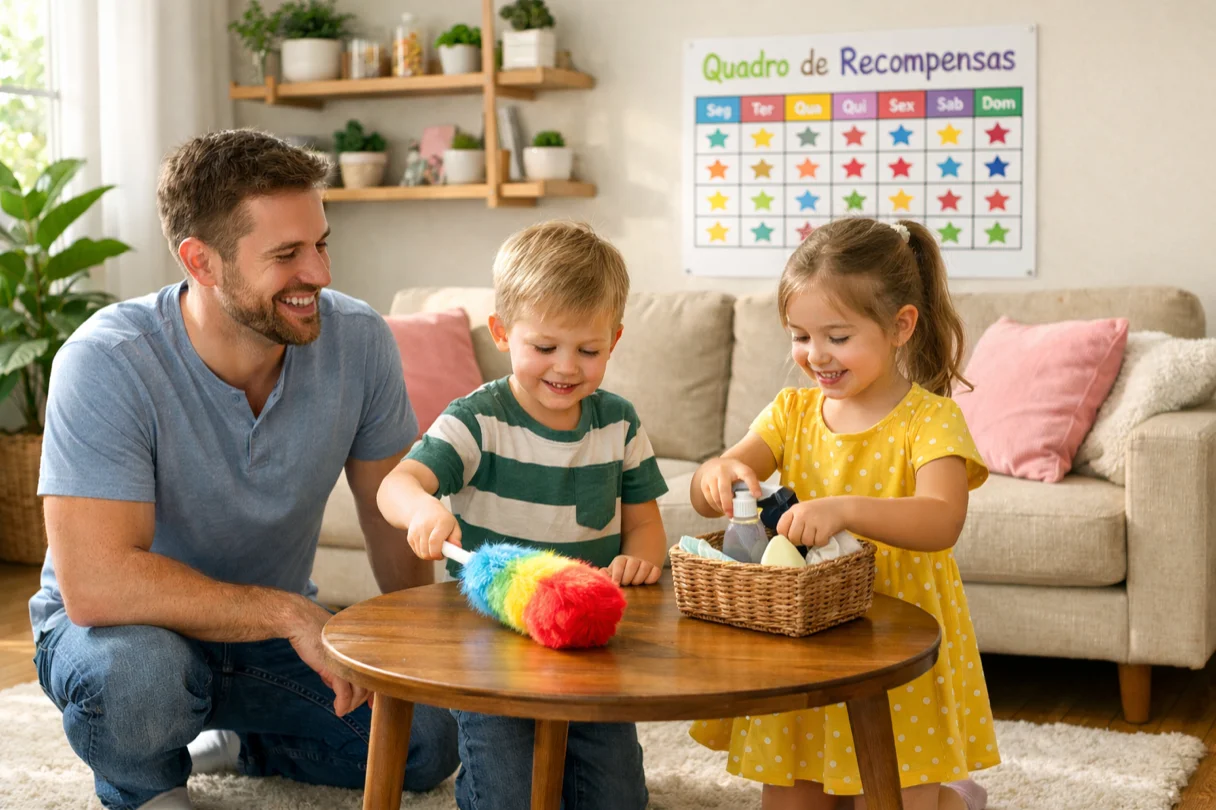
Getting kids engaged in daily chores is a real challenge in many households. Parents worried — or flat-out losing it — kids who won't pitch in or simply don't see the value of what they're being asked to do around the house. The atmosphere can quickly turn draining, with arguments, promises, or rewards that never quite work as expected.
But there's a lighter, more effective, more educational way. I want to share what I've learned and lived — from the small wins to the stumbles and restarts — to make everyday life more harmonious. I believe every family can find its own balance with clarity, motivation, and consistency.
Tip 1: Make chores visible and transparent
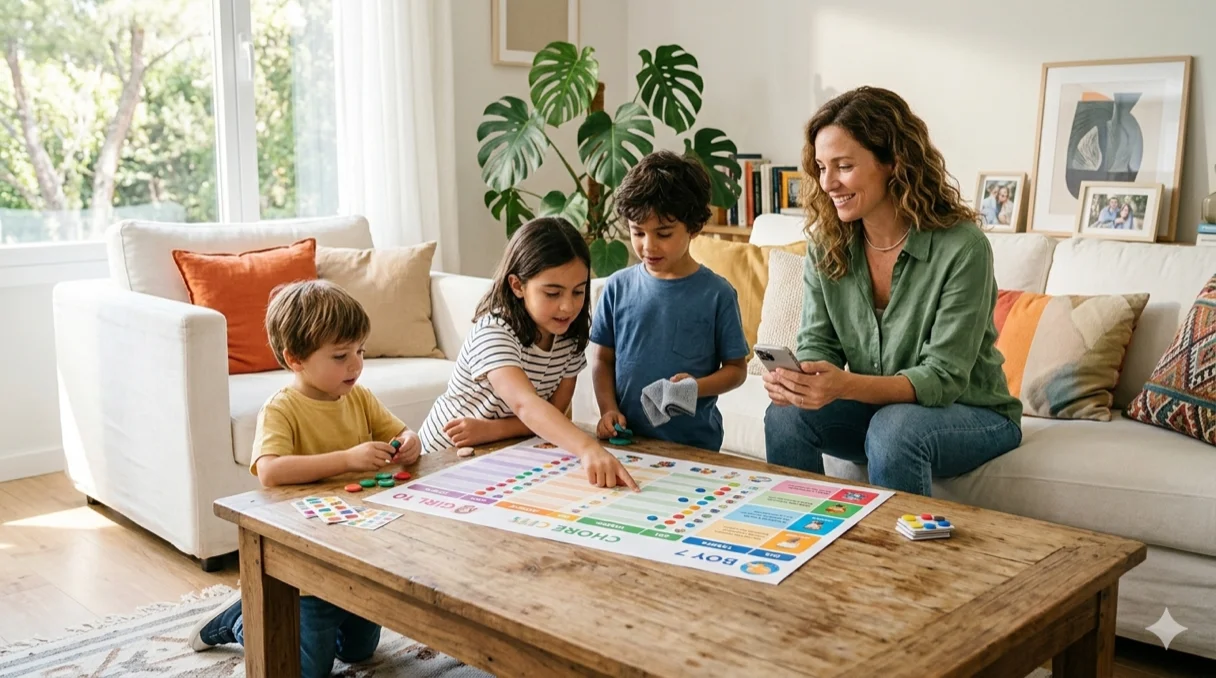
If there's one thing that makes a difference from day one, it's being clear about what's expected of your child. A chart, a chore board, a list on the fridge — the format doesn't matter; what matters is that it's visible to everyone in the house. When the agreement is out in the open, that end-of-day sense of unfairness or surprise drops dramatically.
"A well-explained chore becomes a habit faster."
Using an app or a physical board to track each chore helps a lot. Kids can see what's pending and parents can follow everything, with no confusion about deadlines or responsibilities. It brings peace to the routine and a daily sense of order.
Tip 2: Let your kids help choose the chores
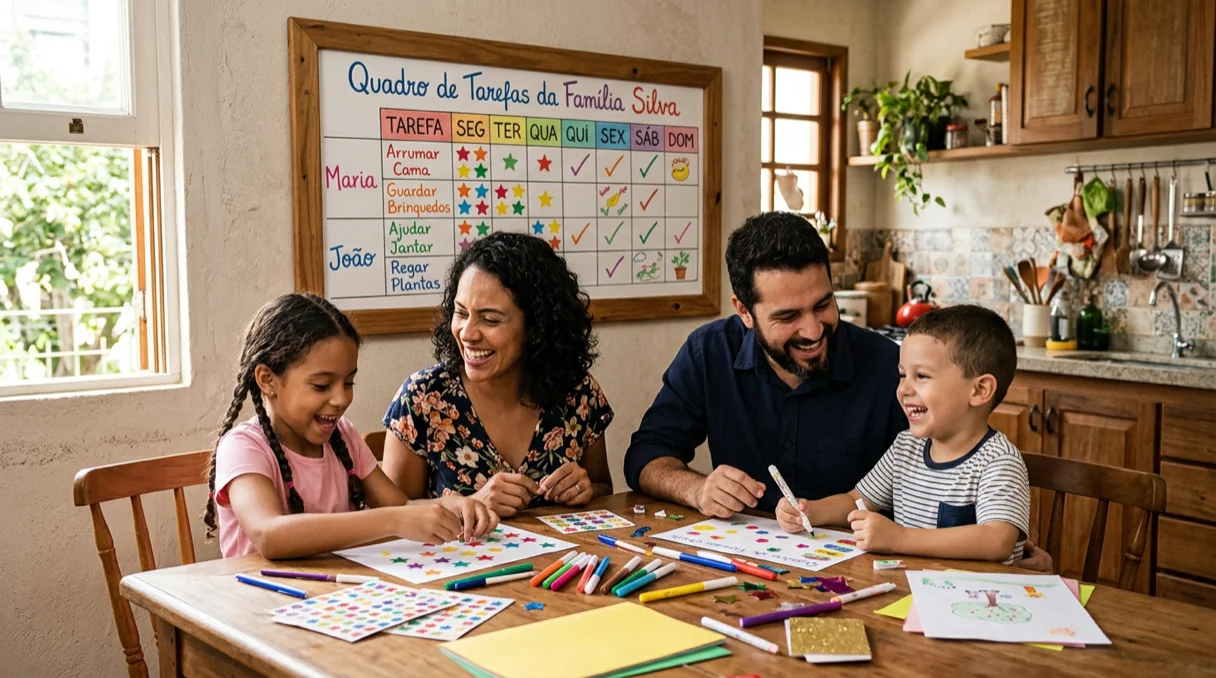
One thing I've noticed: when kids take part in choosing, they commit more. Instead of assigning chores, ask what they think they can handle. That autonomy boosts engagement, builds self-esteem, and leaves room for adjustments when things don't go as planned.
Make it clear that chores contribute to the family's well-being — they're not punishment. Explain why they matter, welcome questions, and be willing to negotiate the details, like timing or rotating jobs between siblings.
Tip 3: Use play and gamification
Gamification is already part of kids' everyday lives. When we turn activities into something that feels like a game, everything changes. Points, leaderboards, and rewards make sense to kids. The idea is simple: every completed chore earns points, every goal reached becomes credit. In Smart Allowance, we use levels like bronze, silver, gold, and diamond to differentiate chores and boost motivation.
If you'd like, invent a weekly challenge: who finishes their chore fastest, who cleans best, who helps without being reminded. Medals, stickers, or praise cards all work. Healthy competition can be fun, as long as everyone knows the goal is to collaborate, not to rival each other.
Tip 4: Give the chores meaning
When kids understand the purpose behind each chore, engagement tends to grow. Explaining that making the bed makes the room cozier, or that clean dishes make for a happier dinner, makes all the difference. I always bring up examples that involve the whole family, showing how each small contribution affects everyone.
Whenever possible, connect the activities to real, everyday situations. Talking about responsibility and money at home helps a lot. That's how kids start to see the connection between effort, reward, and independence.
Tip 5: Match chores to age and personality
A question I get from a lot of parents: "What can my kid actually do?" My suggestion is always to match the chore to each child's size, skill, and maturity. Don't expect a five-year-old to do what a preteen can. Smart Allowance includes chore suggestions by age group, but we encourage every family to look at what makes them unique.
- Little kids can put away toys;
- Older kids can help set the table;
- Teens can help with cooking or do laundry.
Personalize, test, talk. If you'd like a deeper reference on the topic, check out our article on age-appropriate chores for kids.
Tip 6: Praise effort and celebrate progress
At home, I've learned that praising effort motivates more than demanding a perfect result. "I saw you tried," "I love how hard you worked," "That's better than yesterday" — simple, sincere phrases that fuel progress.
Positive reinforcement is the key to building self-confidence and the desire to keep pitching in. It doesn't have to be elaborate — a note, a message, or even a hug makes a difference.
"Kids want our attention — we need to put down the phone."
Tip 7: Keep the routine light and the conversation open
Don't expect the process to always be easy. Some phases are more challenging. Others, surprisingly simple. The important thing, in my view, is not giving up in the face of resistance or exhaustion. If a chore was forgotten, talk it through. If there was a meltdown, take a deep breath and start again.
Creating space for conversation, where your child feels heard, is part of building independence. If things get tense, pause, revisit the rules, or renegotiate the agreements. Peace at home is worth far more than a neatly made bed or a sparkling sink.
Small wins, big lessons
Getting kids engaged in daily chores is a building process — of habits, values, and independence. More than keeping the house tidy, we're helping shape responsible, collaborative adults who understand their role.
In practice, it's the small everyday victories that make the difference: a chore finished and praised, effort recognized, a conversation that reinforces the lesson. These moments strengthen confidence, a sense of responsibility, and the bonds within the family.
There's no magic formula, but there is consistency. When the rules are clear, the recognition is sincere, and the conversation stays open, chores stop being an obligation and become a natural part of the routine.
Start simple, adjust along the way, and celebrate every bit of progress. In the end, it's not just the house that gets in order — it's the family that grows closer, with more responsibility, independence, and harmony.
Frequently asked questions
How do I get my kids engaged in daily chores?
The secret is participation and meaning. Give your child a voice in choosing the chores, explain the why behind each one, and bring play into the routine. Point systems and healthy rewards help a lot, showing progress and building a sense of teamwork.
Which chores are right for each age?
Every age calls for different chores. Little kids can put away toys and help pick things up. Between ages 6 and 8, they can make the bed, feed pets, or pack their backpack. Preteens and teens can wash dishes, handle laundry, and help with small errands. The key is adapting to each child's skill and maturity.
Is it important to reward kids?
Yes — and rewards don't have to be just money. Praise, time together, special activities, or credits in an educational app put the reward in the context of effort, teaching limits and gratitude along the way. The main goal is to motivate participation; tying it to an allowance is an option, not an absolute rule.
How do I handle pushback from little ones?
Pushback is natural, especially when habits are changing. The way through is to keep the conversation open, listen to what's bothering them, and negotiate solutions together. Staying consistent, adjusting chores, and celebrating small wins make the process less draining and more educational for everyone.
How much time should a child help each day?
There's no exact number. For younger kids, quick 5-to-10-minute chores already make a difference. Older kids can take on slightly longer activities, always respecting school and playtime. What matters most is consistency, not quantity. Balance is what builds the habit!
Engage your kids with gamification
Smart Allowance turns these ideas into a real routine — chores, points, and rewards that transform family life.
Get started