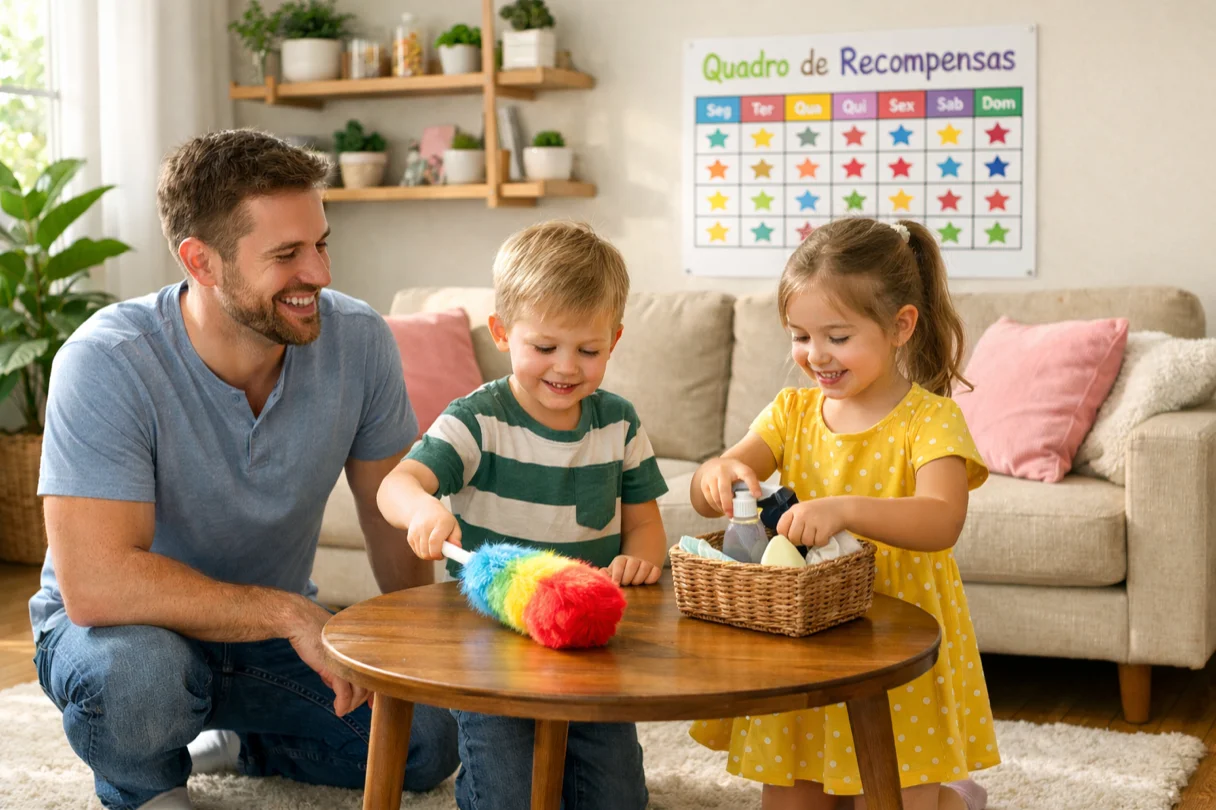
Age-appropriate chores for kids
Set chores by age and build a routine that's organized, motivating, and easy to follow.
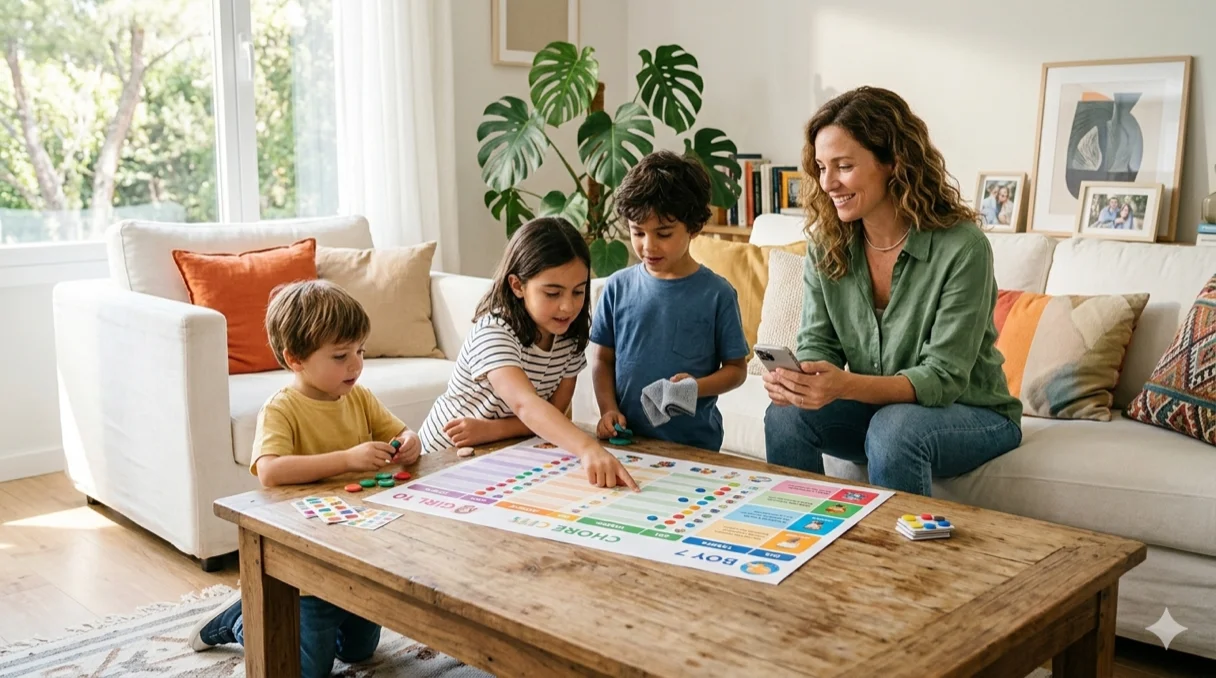
How to assign household chores based on your kids' ages is a common question among parents. Good habits pay off down the road, when kids grow into responsible adults — and, of course, the opposite is true too. But how do you know if you're asking too little or expecting too much? This article brings together the most practical guidance on which types of chores work best for each age group, and the care this process deserves.
Why sharing chores early makes a difference
In many households the scene looks the same: kids spending more and more time on phones, games, or TV, while the housework lands entirely on the adults. Without anyone noticing, the kids stop participating in the life of the home and stop developing everyday responsibility.
In practice, participating in household chores helps build self-confidence, discipline, and a sense of teamwork. It's also an opportunity to connect kids with the value of effort, money, and responsibility — especially when there's a clear link between the chore completed and some kind of recognition.
Maturity and choosing the right chores
Before drafting a to-do list, take a look at each child's development. Age is a starting point, but paying attention to maturity, skills, and limitations makes all the difference. It's common to see siblings close in age approach their responsibilities in completely different ways — and that's perfectly normal.
Most important of all: don't tie chores to punishment, and don't over-inflate small efforts. The goal is to raise adults who see housework as a part of life. Below is a suggested breakdown by age group, always with room for adjustments based on your family's reality.
Which chores fit each age group?
Ages 2–3: first habits
Toddlers already love imitating parents and siblings. With supervision, they can start very simple chores. There's nothing like the pride in a toddler's eyes the first time they toss a scrap of paper in the trash on their own: for them, it's mission accomplished!
- Putting toys away after playing
- Putting dirty clothes in the hamper
- Helping feed the family pet (with supervision)
- Watering a small plant
- Putting their shoes where they belong
Ages 4–6: guided action

At this age, kids can already understand simple rules and love having "official" chores. Ideally, give them options so they feel part of the decision-making process.
- Packing their backpack for school
- Getting dressed on their own
- Folding clothes and putting them in the drawer
- Carrying utensils and plates to the table
- Helping sort the laundry
Ages 7–9: growing independence
They understand more complex instructions and start taking an interest in new little jobs. This is usually the ideal stage to attach some form of recognition, like points in an app or specific, detailed praise.
- Helping put away groceries
- Getting themselves ready for school
- Making simple snacks (a sandwich, for example)
- Clearing the table after meals
- Sorting the recycling
Ages 10–12: routine with more responsibility
Understanding of consequences and benefits gets much clearer at this stage. Kids this age tend to feel valued when they earn small "domains" of their own at home, like being the one in charge of watering all the plants or keeping their own bathroom clean.
- Getting school supplies and lunch ready
- Washing and peeling simple fruits
- Helping vacuum smaller rooms
- Helping wash the dishes after meals
- Looking after one room of the house (e.g., always tidying the living room after use)
Ages 13 and up: independence and trust

At this stage, kids can (and want to) be heard on deadlines, rules, and limits. Many parents worry about overloading their teens or facing resistance when adding chores in adolescence. My recommendation is to look for balance, with respect and open dialogue.
- Washing, drying, and folding laundry
- Cooking simple meals with guidance
- Taking full responsibility for a pet's daily care
- Helping with small grocery runs
- Creating a study schedule and sticking to it
- Cleaning and organizing their room weekly
- An extracurricular or job-skills activity
How to avoid fights and encourage engagement
So much changes at home when a family starts making the process clearer, fairer, and even fun. Bringing in visual tools — calendars, chore boards, or apps — adds lightness to the routine, especially because both kids and parents get to see everyone's progress.
"Light routine, close family."
Another simple tip that works: explain the reason behind each chore. When kids understand the impact of their own contribution, they feel more valued.
Why recognition matters — and tying allowance to chores
Recognition is one of the strongest drivers of engagement. When the allowance is tied to chores, the learning becomes more concrete and meaningful. Kids see, in practice, that effort produces results — and that money has value because it was earned.
That connection strengthens responsibility, independence, and planning skills. For it to work well, the rules need to be clear, the follow-through consistent, and the chores and rewards appropriate for your child's age and your family's reality.
The importance of clarity and adaptation
At first, your kids may not adapt right away. That's okay. In practice, transparent rules, clear chore descriptions, and steady parental follow-through get you halfway there. Clear records — in an app, a spreadsheet, or a chart on the wall — help keep everything visible and fair for everyone.
Every family has its own pace, values, and traditions. Ideally, the chores grow along with the kids, with adjustments whenever they're needed.
How to build a chore chart that works
If you're starting from scratch or having a hard time establishing the routine, a few simple steps help:
- List every chore in the house and think about which ones can be delegated.
- Talk with your family to understand preferences and difficulties.
- Build a visual chart (digital or paper) with names, chores, and rewards.
- Set clear deadlines and easy-to-understand rules.
- Reassess and adjust as needed, listening to everyone's input.
In Smart Allowance, you'll find 70+ suggested chores, organized by age and difficulty level with built-in gamification (bronze, silver, gold, and diamond), ready for each family to make their own.
Where can technology help?
Many parents start with paper lists, spreadsheets, or a chart on the fridge. Despite the good intentions, over time it gets hard to keep everything up to date, track progress, and celebrate each win — especially with kids of different ages and several chores running at once.
Technology can simplify the process, making it quick and organized to log chores, points, photo evidence, and parent approvals. The impact shows up in engagement: when kids can watch their points grow and their allowance build, the learning becomes clearer and more motivating — after all, that's their world!
Conclusion: turning chores into learning and harmony
Involving your kids in household chores is a practical way to teach responsibility, independence, and a sense of teamwork. When the activities fit their age and evolve along with their maturity, the learning happens naturally, without overload.
The secret is consistency: clear rules, realistic expectations, recognition for effort, and room for conversation. Over time, small daily responsibilities build habits that will make a difference for life.
Start with simple chores, adjust to your family's needs, and follow the progress closely. More than an organized house, the result is a more cooperative home, more confident kids, and a routine with less conflict.
In the end, it's not just about dividing up chores — it's about preparing your kids for life.
Frequently asked questions
What chores can a 5-year-old do?
Five-year-olds can handle small chores with light supervision. They can put away toys, put dirty clothes in the hamper, help set the table with lightweight items, water plants, and organize their own shoes and backpack. The most important thing is keeping instructions clear, matching activities to the child's size and strength, and encouraging them with praise and small recognitions.
How do I motivate my kids to help around the house?
The secret to engaging kids in chores is mixing routine, fun, and recognition. Point systems, visual charts, and progress tracking tend to make all the difference. It also helps to talk about everyone's role at home, celebrate small wins, and keep the rules fair and flexible for each child's age and stage.
Is it safe to give chores to young children?
Yes, as long as the chores fit their age and are supervised by adults. Early chores shouldn't involve risk of injury, contact with toxic products, or heavy lifting. Putting away toys, tossing trash in the bin, or helping feed pets are examples of safe activities when supervised. The care is in adapting to each stage and maturity level.
Until what age should kids have set chores?
In practice, chores can and should continue through childhood and adolescence, with complexity growing alongside age and independence. Teens tend to engage better when they help choose and adjust their own responsibilities. The key is keeping the conversation open and revisiting the chores whenever the family's routine or needs change.
How do I split chores between siblings of different ages?
Splitting chores between siblings requires respecting differences in age, strength, and maturity. The ideal is to assign jobs according to each child's abilities, rotating chores when possible and encouraging them to help each other. Tools like visual charts or apps make everyone's chores easy to see, keeping the process fair and transparent for the whole family.
Want a ready-made chore list by age?
Smart Allowance includes 70+ suggested chores organized by age group. A complete chores-and-rewards app for the whole family.
Get started