
Free printable chore chart for kids (by age)
Weekly chore charts with points for every age — ready to print, or to edit in Word and Google Docs.
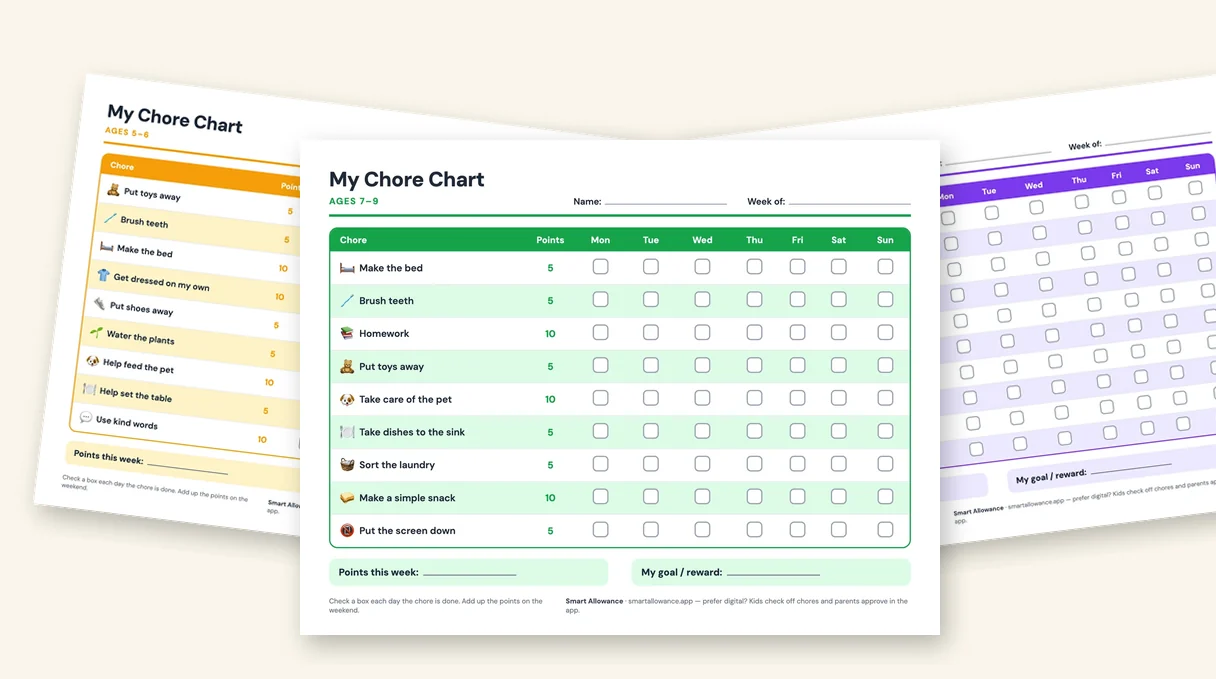
Every family I know has tried a chore chart at some point. Most of them start strong on Monday and are forgotten by Thursday — not because chore charts don't work, but because the chart was too long, too vague, or nobody looked at it again. So I put together the kind of chart I wish we had used from the start: short, organized by age, with points that add up to something. They're free — print the PDF as is, or download the editable version and change anything you like.
Download the chore charts
Each chore chart for kids covers a full week, with a box to check for every day, a points column, and space at the bottom for the weekly total and the goal your child is working toward. All of them print on a regular US Letter page, in landscape. The age groups, chores, and points are the same ones the Smart Allowance app suggests for each age, so if you switch to the app later, your child will recognize every chore.
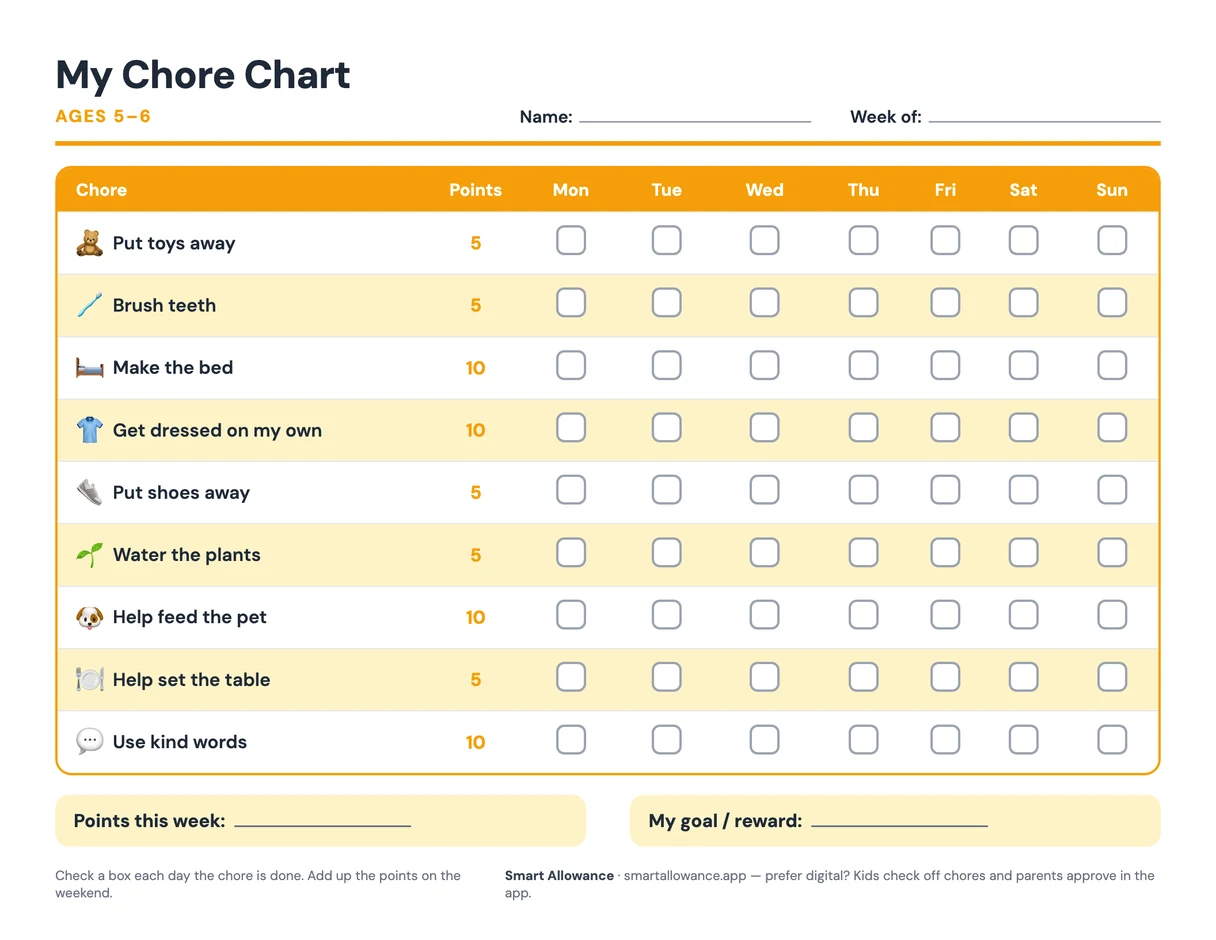
Ages 5–6
Nine simple chores with pictures for kids who are still learning to read: put toys away, brush teeth, make the bed, help feed the pet.
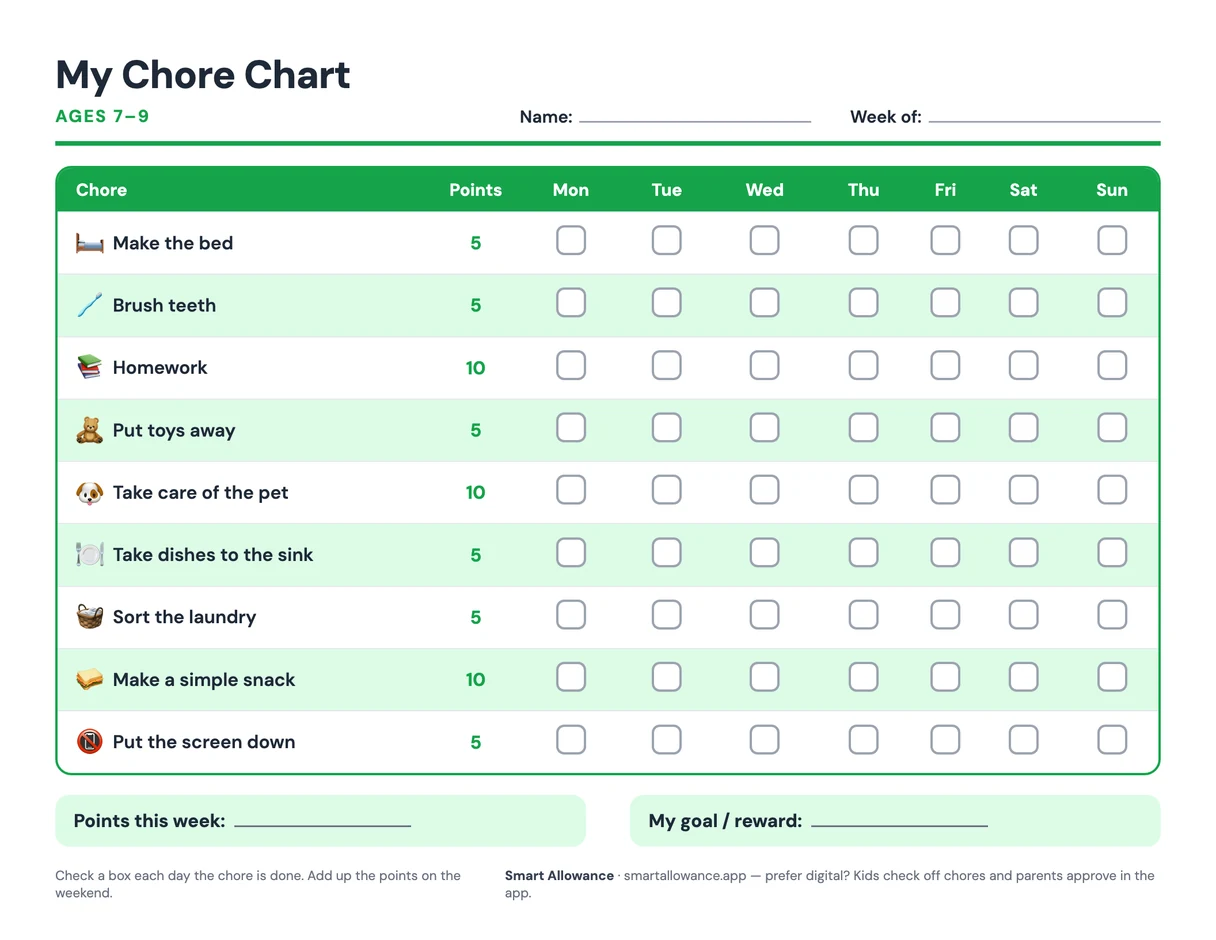
Ages 7–9
Nine chores for growing independence: homework, take care of the pet, take dishes to the sink, sort the laundry, make a simple snack.
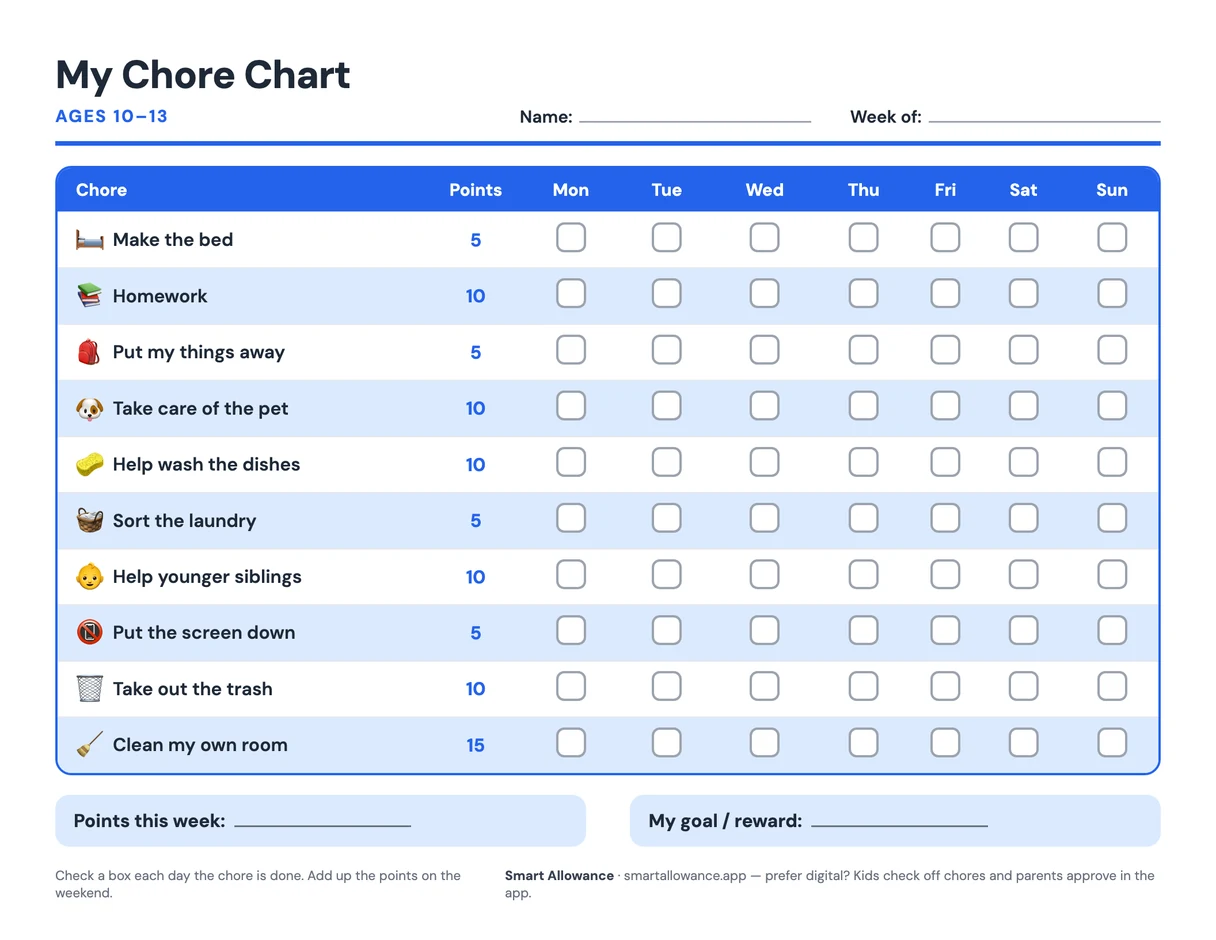
Ages 10–13
Ten chores for preteens: help wash the dishes, help younger siblings, take out the trash, clean their own room.
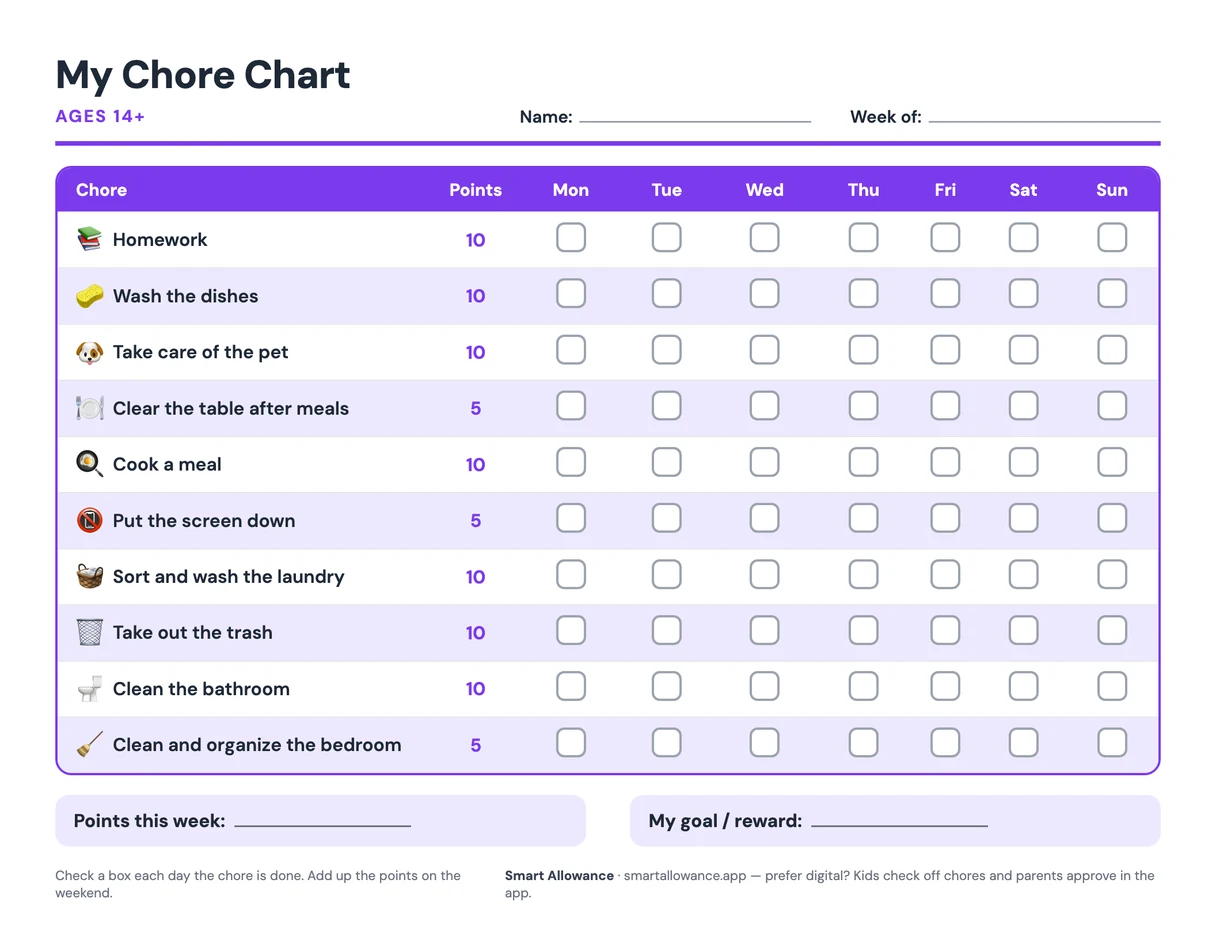
Ages 14+
Ten bigger responsibilities for teens: wash the dishes, cook a meal, do their own laundry, clean the bathroom.
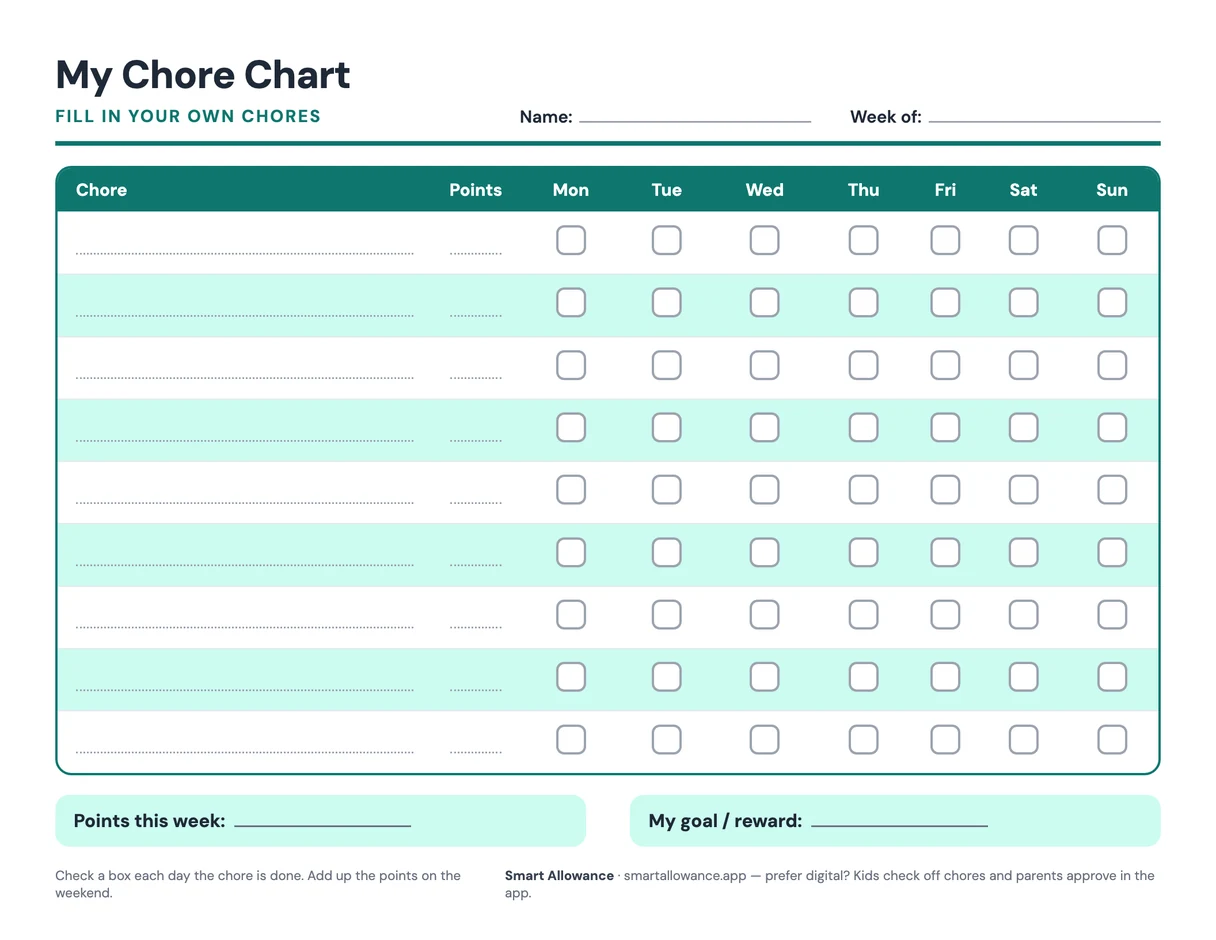
Blank template
Write in your own chores and points — the editable version is the easiest way to customize it.
The chores and points are suggestions. If your 9-year-old already helps with the dishes, use the 10–13 chart or edit the 7–9 one. For more ideas by age, see our guide to age-appropriate chores for kids.
How to use the chore chart
- Pick the chores together. Sit down with your child and choose five to nine chores. Kids follow a chart they helped build much more willingly than one handed to them.
- Agree on the points. Harder or longer chores are worth more. Decide upfront what the points turn into — an allowance, screen time, or a savings goal.
- Post it where everyone sees it. The fridge or the bedroom door works best. A chart in a drawer is a chart nobody fills in.
- Check a box each day. Let your child do the checking. That small moment of "done!" is half the motivation.
- Add it up on the weekend. Count the points together, write the total, and deliver whatever was agreed — every single week.
- Adjust every few weeks. Swap chores that became too easy for new ones, so the chart grows with your child.
What makes a chore chart work
After talking with a lot of parents, I've noticed the charts that last have a few things in common:
- Short and specific. "Tidy my room" works; "be helpful" doesn't. A child should know exactly when a chore is done.
- Visible progress. Seeing the boxes fill up during the week is a reward on its own.
- A clear reward. Points that turn into something concrete — even something small — keep the chart alive. If you tie it to money, our guide to how much allowance to give by age helps you set the value.
- Praise for effort. Recognize the week, not just the total. I share more ideas in 7 tips to get kids engaged in daily chores.
- Consistency from the adults. If the weekly review gets skipped, kids notice — and stop checking boxes.
Daily or weekly chart?
A weekly chart with a box for each day is the best fit for most families: kids see the whole week at a glance, and you only add up the points once. For very young children, a daily chart with three or four chores can be easier at first — then move to the weekly version once the routine sticks.
Paper chart or app?

A printed chore chart is a great way to start. It gets harder as the family grows: several kids, several charts, points to add up every week, and no record of last month. That's exactly why I built Smart Allowance. Kids check off chores on their own phone or tablet, you approve them with a tap, and the points add up automatically — with a history of every week and the allowance calculated from the points.
Many families use both: the paper chart on the fridge for the little ones, and the app for older kids who already live on their screens.
Conclusion
A good chore chart is short, visible, and reviewed every week. Pick the chart that fits your child's age, choose the chores together, and make the weekend tally a family ritual. The chart does the reminding, so you don't have to.
Frequently asked questions about chore charts
How many chores should be on a chore chart?
For most kids, five to nine chores is the sweet spot. Fewer than five feels too easy to matter; more than ten turns the chart into a list nobody finishes. Start small and add a chore when the routine sticks.
Do chore charts actually work for kids?
Yes, when the chart is visible, the chores are clear, and progress is recognized every week. A chart that is posted on the fridge and reviewed every weekend works far better than one that is filled in for a few days and forgotten.
Should kids get paid for chores on a chore chart?
Many families tie points on the chart to an allowance, a privilege, or a savings goal. Some keep basic chores unpaid and reward only extra ones. What matters is that the rule is clear before the week starts.
Is a daily or weekly chore chart better?
A weekly chart with a box for each day works for most families: kids see the whole week at a glance, and parents add up the points once, on the weekend. Very young kids may need a simpler daily chart with fewer chores.
What chores should be on a chore chart for a 7-year-old?
Good chores for ages 7 to 9 include making the bed, brushing teeth, doing homework, taking care of the pet, taking dishes to the sink, sorting the laundry, and making a simple snack.
Ready to go digital?
Kids check off chores, you approve with a tap, and points add up automatically — all in one app.
Get started